The Architect of Connection: How Martin Cooper Revolutionized Global Communication

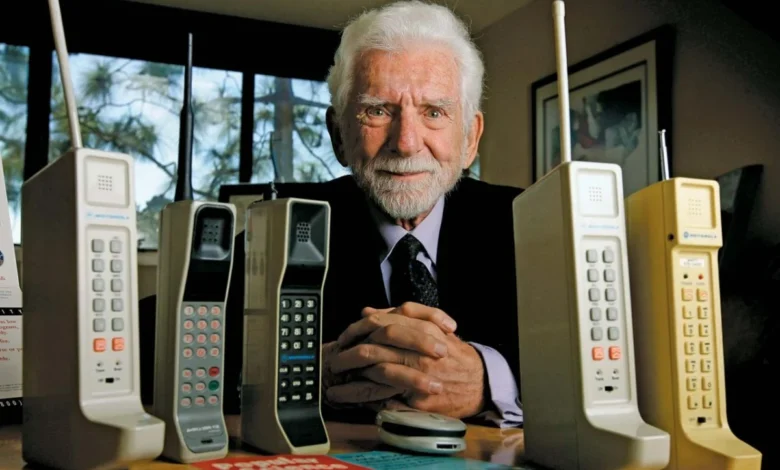
Martin Cooper stands as the quintessential visionary of the wireless age, a man whose mid-20th-century intuition fundamentally dismantled the paradigm of fixed-location telephony. As an engineer at Motorola, Cooper did more than invent a piece of hardware; he redefined the human experience by decoupling communication from geography. While contemporary society takes instantaneous, mobile connectivity for granted, the transition from tethered copper wires to the ethereal freedom of cellular networks was a monumental engineering and social feat, one that serves as the bedrock of the modern global economy.
The Genesis of Mobility: A Shift in Philosophy
The conceptual breakthrough that led to the mobile phone was not merely technological; it was philosophical. In the early 1970s, telephone numbers were tied to physical locations—a desk, a home, or a specific building. Cooper’s innovation was to shift the identity of the telephone number from a place to a person. By assigning a unique identifier to an individual rather than an infrastructure port, Cooper envisioned a world where communication followed the person, not the location.
This shift was the catalyst for the mobile revolution. By removing the "tether," Cooper provided professionals and individuals with a degree of freedom that was previously unimaginable. This transition effectively eliminated the "dead time" of travel and transit, allowing for real-time information exchange regardless of the user’s physical coordinates.
Chronology of a Revolution: From Concept to Consumer
The road to the first mobile call was paved with intense research and a decade-long development cycle that tested the limits of 1970s radio technology.
- 1960s – The Early Vision: As radio technology matured, engineers at Motorola and Bell Labs began exploring the viability of mobile networks. However, the prevailing industry consensus focused on car-mounted telephones, which required massive power sources and heavy equipment.
- 1972 – The Prototype Phase: Cooper, leading the communications systems division at Motorola, pushed his team to pursue a handheld device, challenging the industry’s fixation on vehicle-based systems.
- April 3, 1973 – The First Public Call: In a historic demonstration in New York City, Cooper utilized a prototype of the DynaTAC (Dynamic Adaptive Total Area Coverage) device. Standing on Sixth Avenue, he placed a call to his rival at Bell Labs, Joel Engel, effectively signaling the beginning of the end for landline dominance.
- 1973–1983 – The Regulatory and Technical Grind: Following the successful demonstration, Motorola faced a grueling ten-year journey to bring the device to market. This period involved navigating complex FCC regulations, securing spectrum allocation, and refining the battery life and circuit miniaturization of the hardware.
- 1983 – Commercial Launch: The Motorola DynaTAC 8000X was finally released to the public, carrying a price tag of nearly $4,000 (roughly $12,000 in today’s inflation-adjusted currency). It offered 30 minutes of talk time and required ten hours to charge.
The Technical Challenge: Engineering the Future
The development of the DynaTAC was not without significant hurdles. The device measured nine inches in length and weighed approximately 2.5 pounds. Its internal architecture required the miniaturization of dozens of circuits, a task that pushed the boundaries of semiconductor technology at the time.
Beyond the handset, the creation of a cellular network—which allows a device to "hand off" a signal from one base station to another as the user moves—was arguably the most difficult aspect of the project. This required the development of sophisticated switching technology that could track the user’s location without dropping the call, a system that serves as the direct ancestor to today’s 5G networks.
Supporting Data and Industry Impact
The impact of Cooper’s invention is best measured in the explosive growth of the industry over the last five decades. According to data from the International Telecommunication Union (ITU), mobile-cellular subscriptions have ballooned from essentially zero in 1973 to over 8.6 billion today, exceeding the total global human population.
In the 1980s, the focus was on establishing basic coverage. By the 1990s, the introduction of 2G digital networks allowed for text messaging and basic data. The 2000s brought 3G, enabling mobile internet, and the subsequent decade introduced 4G and 5G, which transformed the smartphone into a primary hub for commerce, navigation, and entertainment.
Economically, the mobile industry now accounts for approximately 5% of global GDP, supporting millions of jobs in manufacturing, software development, and service delivery. The ability to conduct transactions, access information, and coordinate logistics from anywhere has become the backbone of the global supply chain, allowing for a level of operational efficiency that would have been impossible in the era of fixed-line telephony.
Official Perspectives and Historical Reflections
In various interviews, including the 38th-anniversary commemoration hosted by CNN, Cooper has frequently downplayed his role as a solo inventor, preferring to credit the collective effort of the Motorola team. However, his peers and historical analysts emphasize that without his leadership in the 1970s, the transition to personal mobility would have been delayed by at least a decade.
"The concept was simple," Cooper noted in later reflections, "but the implementation was a fight against the status quo." At the time, the telecommunications industry was dominated by monopolies that viewed the phone as a utility tied to a home. Cooper’s insistence on a portable, personal device challenged the business models of the major carriers of the era, who were skeptical of the demand for such a product.
Industry experts today characterize the 1973 demonstration as the "Kitty Hawk moment" of the telecommunications industry. Just as the Wright brothers’ flight changed the nature of global travel, Cooper’s first call changed the nature of human interaction.
Broader Implications: The Evolution of Connectivity
The implications of Cooper’s work extend far beyond business. Mobile telephony has acted as a democratizing force, particularly in developing nations where laying copper wire infrastructure was never economically viable. In many regions of Africa and Southeast Asia, the mobile phone was the first telephone many citizens ever owned, providing access to banking services, medical consultations, and educational resources that were previously gated behind infrastructure barriers.
However, the rapid expansion of mobile technology has also introduced new challenges. The "always-on" nature of modern life, a direct consequence of the mobility Cooper pioneered, has led to discussions regarding work-life balance and digital fatigue. Furthermore, the reliance on mobile infrastructure has created a new type of systemic risk, where the failure of cellular networks can paralyze entire urban centers.
Despite these challenges, the trajectory remains clear. The evolution from the 2.5-pound DynaTAC to modern smartphones—which possess more computing power than the Apollo 11 moon mission guidance systems—demonstrates the exponential pace of technological advancement.
Conclusion: A Legacy in Constant Motion
Martin Cooper’s vision was not just about the device, but about the empowerment of the individual. By detaching the user from the wall, he enabled a level of autonomy that has come to define the 21st century. As we look toward future iterations of communication technology—including satellite-to-phone connectivity and the integration of artificial intelligence into mobile interfaces—the core principle remains the one Cooper championed in 1973: the freedom to communicate anywhere, anytime.
The legacy of the DynaTAC and the subsequent mobile explosion is a testament to the power of a single, well-articulated idea. While the technology will continue to iterate, the fundamental shift in human connectivity—from being located to being reachable—stands as one of the most significant sociological advancements of the modern age. Cooper’s work continues to resonate in every text message, data packet, and voice call that traverses the globe, reminding us that the most powerful inventions are those that expand the boundaries of human potential.